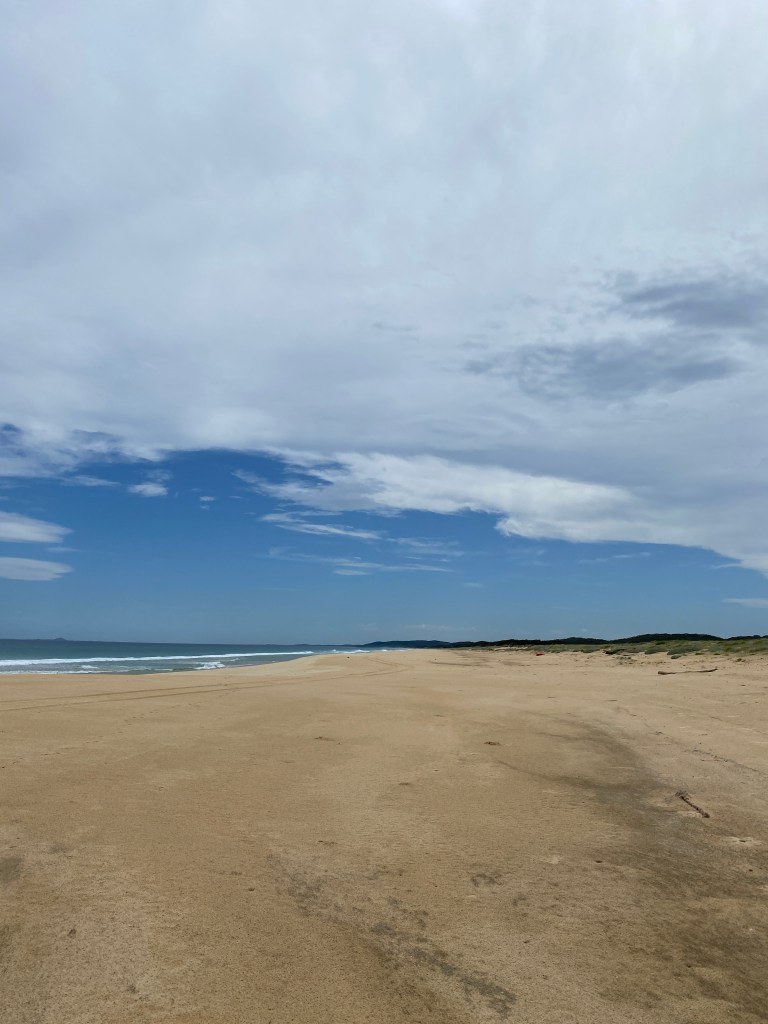
Fiona Beach (beach key NSW 220) is located to the south of Seal Rocks on the NSW Midcoast, about three and a half hours north of Sydney. With no direct track or road access, it is reached only by a long walk south from Submarine Beach – which is itself accessible via a short track from Yagon campground.
Living on Sydney’s densely populated coast, it’s rare that I get to experience long and remote beaches like this one. Visiting them therefore feels like a sort of pilgrimage; a harkening back to the wild stretches of Western Australian coastline that remain some of the most resonant landscapes of my life. Because in Sydney there is no Wilbinga or Preston Beach within an hour’s drive, and certainly no Leighton or Swanbourne; unbroken and sparsely peopled stretches of sand that somehow manage to exist alongside prime coastal real estate.
Fiona Beach is also of interest due to the murkiness of its boundaries. At some completely unmarked point, Submarine Beach – itself a long and remote beach – becomes Fiona Beach, which feels especially arbitrary given that Fiona Beach is virtually inaccessible anyway, completely uninhabited, and merely a continuation of the same broad stretch of sand running down to Big Gibber Head. Beachsafe tells me it is 8.8km in length, and I can attest that it does indeed feel long and remote.
After several walks along this coastline, I came to think of this washed up traffic barrier as delineating the boundary between Submarine and Fiona beaches:
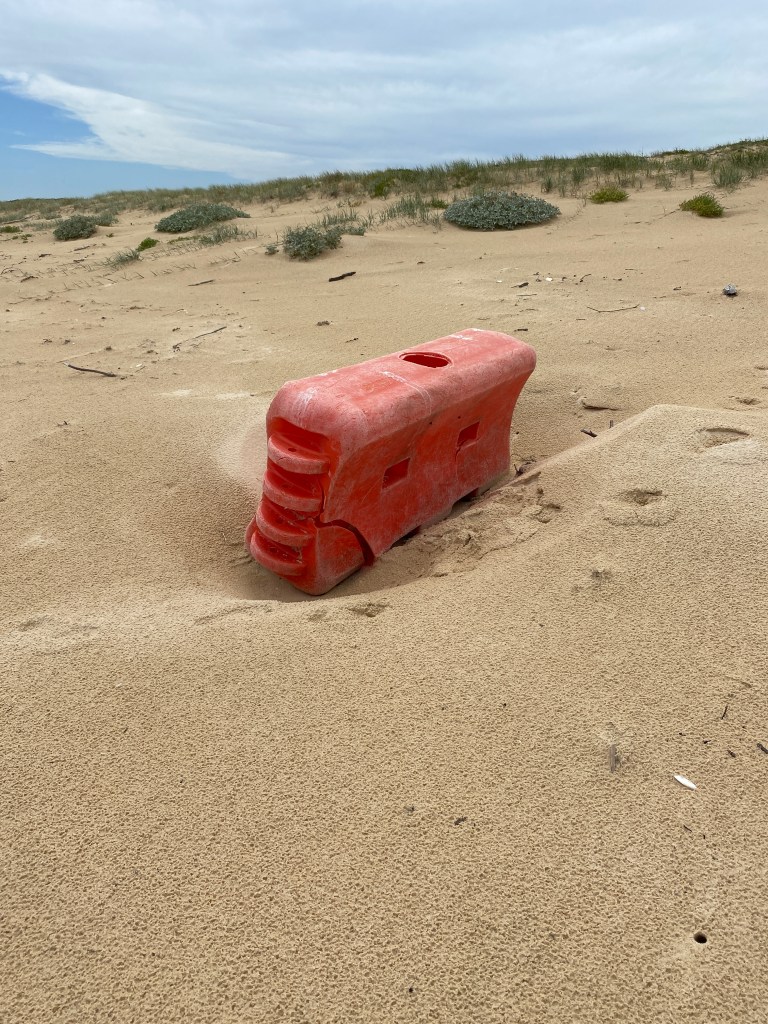
How strange to find this enormous bit of human detritus (presumably fallen off a ship) on such a wild and obscure stretch of coast. Yet this was just one of the many pieces of flotsam I found while walking a beach that felt more than a little post-apocalyptic, especially under an overcast sky. A sweeping landscape littered with things so impossibly dead to memory that I too began to feel like a ghost, a salt encrusted spectre consigned to littoral wanderings for eternity.
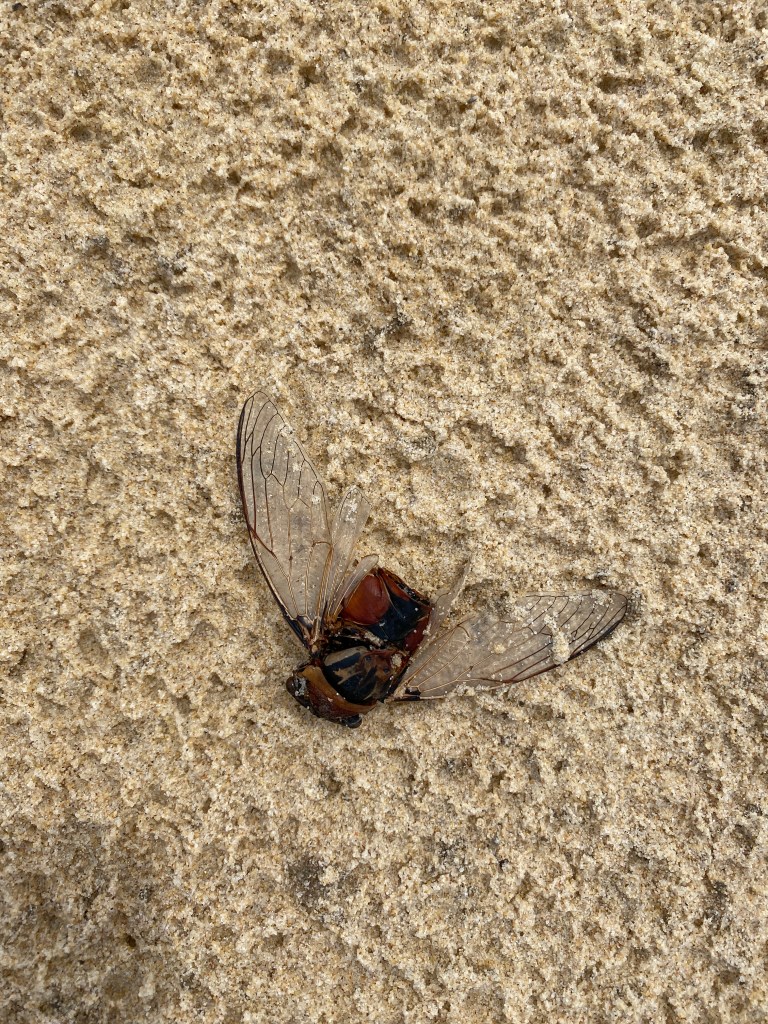
It’s impossible not to think this way when death is an omnipresent feature of Fiona Beach. the shoreline is littered with thousands of cicadas, dead or in the throes of dying. My best guess is that the wind sweeps their papery carcasses from the adjacent bush out to sea, before the swell brings them back in again.
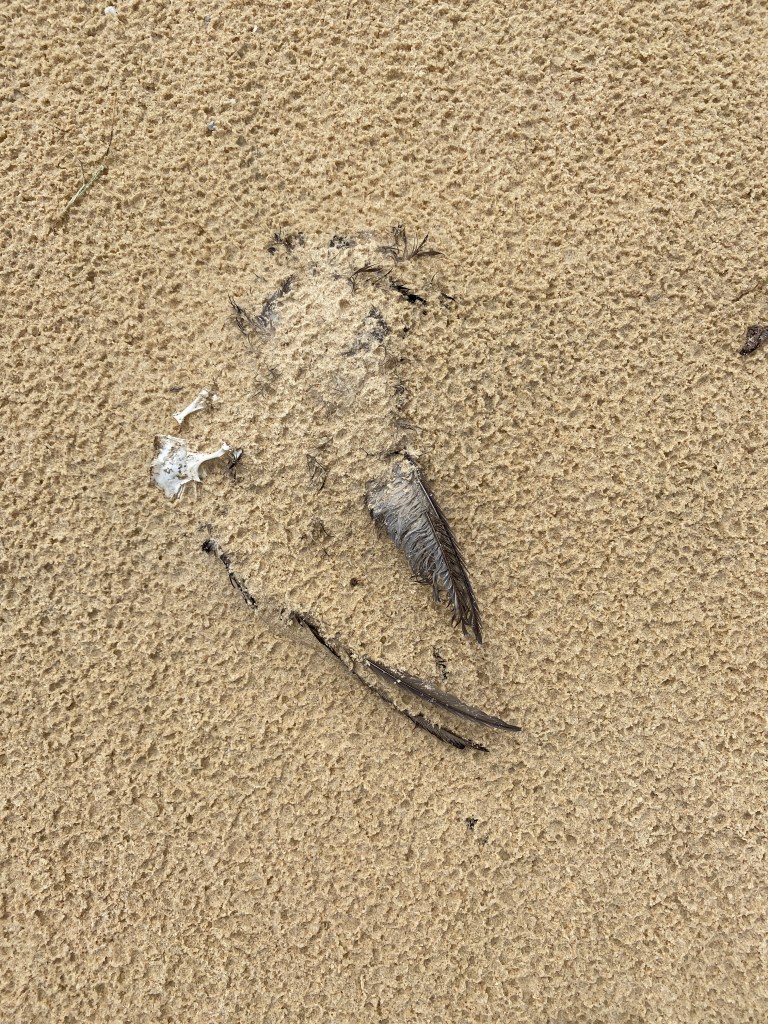
Similar wave action must also be responsible for the countless dead seabirds that also cover this shore. These are birds of not inconsiderable size, but they are largely buried; bodies almost hammered into the sand with only a single desiccated wing or foot betraying their resting place.
Fiona Beach might seem especially wild, but it is only a reminder that all beaches are inherently harsh and fatalistic environments. Especially ‘deserted’ ones such as this, where tiny crabs and evasive plovers are the only other living creatures in sight.
For all the romance and vitality attached to these landscapes, they are challenging ones in which to exist. Arid, shadeless, relentlessly exposed, and bounded by forbidding oceans. Indeed it is an especially forbidding Pacific on this particular day at Fiona Beach, with austere and windblown six-foot sets crumbling far out the back before reforming into punishing closeouts on the inside. The air feels raw, and no amount of sun protection can stop one from feeling somehow assailed; battered not by the sun’s rays but by a sort of unearthly solar atmosphere. A washed up BOM device is a reminder that we really are out in the elements here.
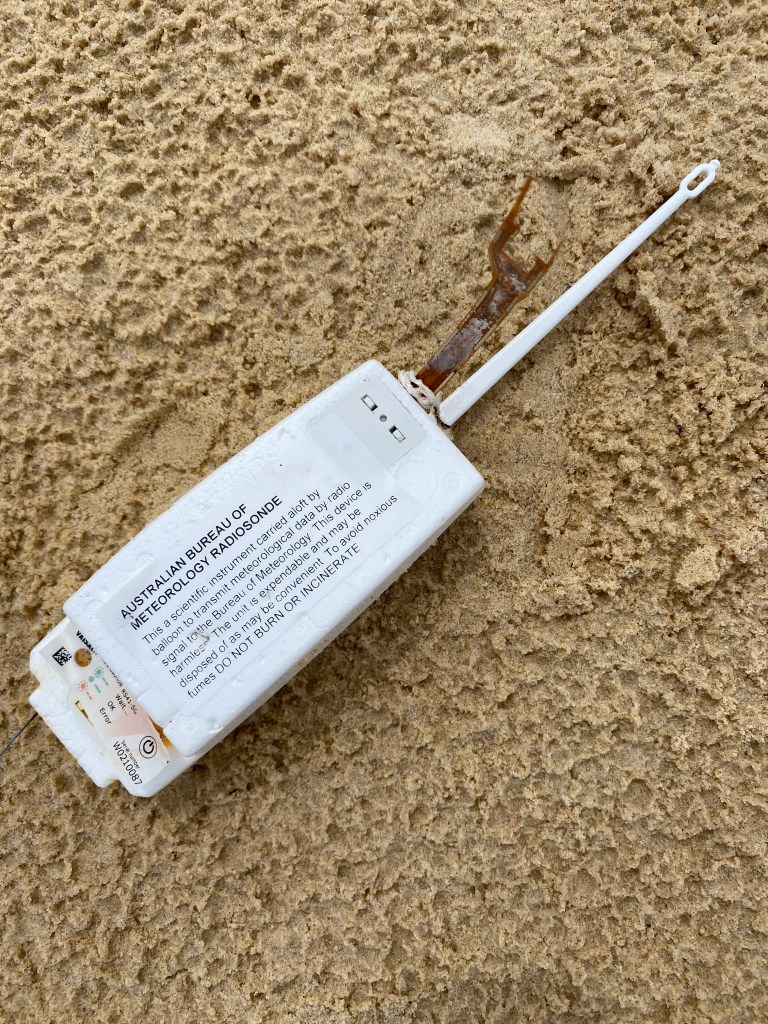
The psychic environment of a beach like Fiona is equally brutal, because it represents an end to things; a point at which one can go no further. The ocean that borders it is not just a physical frontier, but a mental one.
This is unchartered and often uncomfortable territory, but it does have a certain draw. While walking, I’m reminded of a passage from W. G. Sebald’s The Rings of Saturn, which describes fishermen camped out on a grey Suffolk coast, living alone in tents, catching nothing:
I do not believe these men sit by the sea all day and all night so as not to miss the time when the whiting pass, the flounder rise, or the cod come into shallower waters, as they claim. They just want to be in a place where they have the world behind them, and before them nothing but emptiness.
It sounds grim and depressive, but the beach has long been considered a symbol of ‘escape’ for all the same reasons. An idyllic place where the worries of the world, and the world itself, fades into the rearview and one can stare into therapeutic nothingness. I would argue that this sense of escape is especially pronounced at a beach like Fiona Beach where there really is nothing, and what few reminders of humanity exist seem utterly pointless – like this wheel.
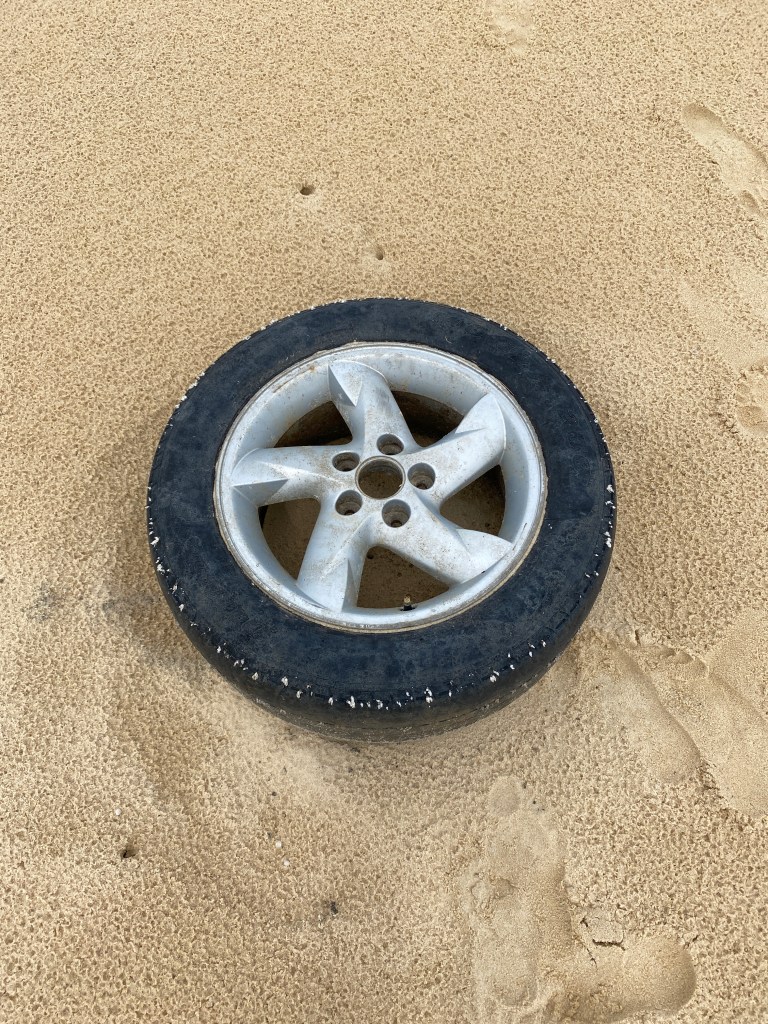
Walking a beach like Fiona Beach is also my way of making sense of these psychic frontiers. It is an assertion of control over a landscape that feels largely unknowable. Because while the ocean remains inaccessible, I can at least walk its periphery and come away feeling like I have some new insight into this unchartered territory.
But Fiona Beach affords no such illusion of understanding. The beach is long and, with no defined access points, walking the full length would necessitate a return trip of nearly 17km. In the absence of clear landmarks save for the distant Big Gibber Headland, this already forbidding distance becomes a void in which it is difficult to gauge how far you have come and how far you have to go. it is a place where you feel suspended, context-less; a place not unlike the mental landscapes of The Central Steppe. You are on the edge of what you can know, surrounded by writhing cicadas, fallen seabirds, and the litter of Chinese merchant marines.
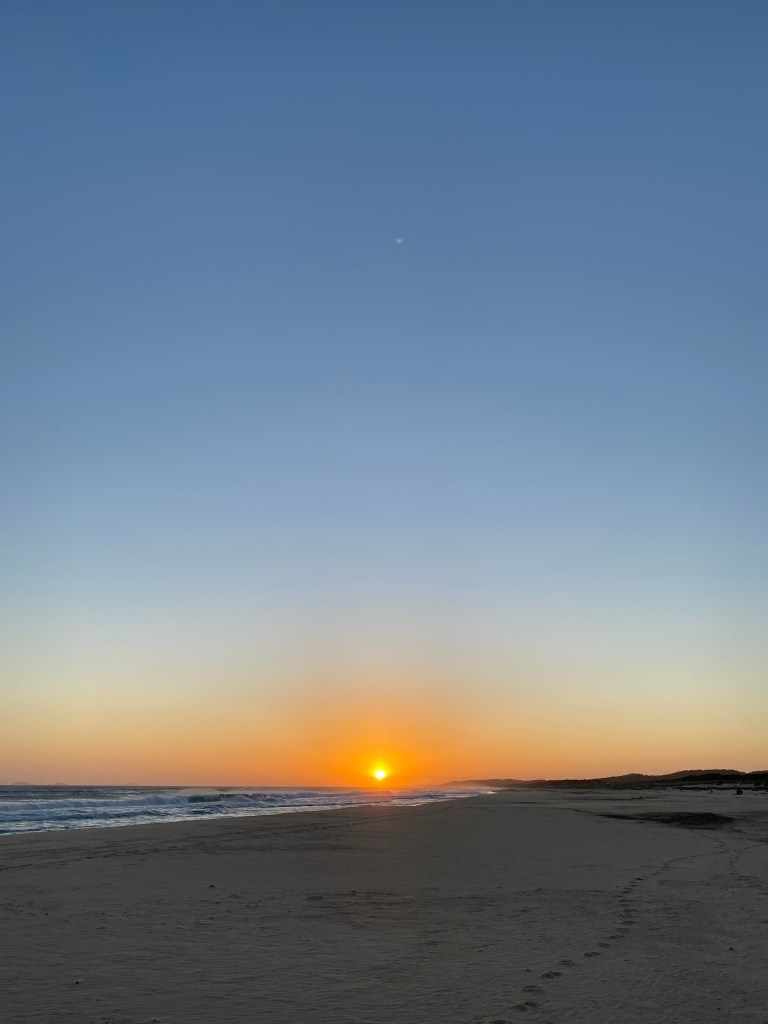
On a beach like this, you abandon even that modicum of purpose that comes with walking from point A to B. There are no points. Walking becomes wandering. The result is a dizzying sense of freedom that can only come from a vast, empty landscape that’s just barren enough to deter other people from visiting. A feeling I will always associate with the windblown Western Australian coastline, but which can occur anywhere should you wish to find it. As if to remind me of this fact, the angle of Fiona Beach actually creates the illusion of the sun setting over the ocean – so it really does resemble a deserted WA beach come sunset.

Armed with warm beer and a UPF shirt I leaned into it, and felt as elemental as I ever have. Skin coarsened by the salty air, eyes fixed in a permanent squint, shoulders saddled with a shopping bag I steadily filled with sandy rubbish. Fiona Beach is unforgiving, but the best beaches always are.
 Jackson's Ephemera
Leave a comment